November Without the Gloom: Three Colour Stories for Overcast Days
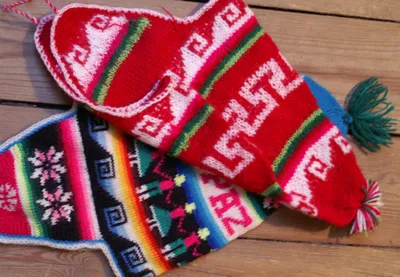
Photo: Development education, CC BY-SA 3.0, via Wikimedia Commons
By the end of November the British sky has settled into a specific kind of grey. Not dramatic, not stormy, just a flat, low, damp grey that runs from about eight in the morning until roughly ten to four. In that light, everything looks slightly dusty, including your child, who was perfectly clean forty minutes ago.
The instinct is to reach for brightness. A neon yellow jacket. Rainbow stripes. Something, anything, to punch through. It rarely works the way we hope, and there is a reason for that.
Brightness Isn't the Same as Cheerfulness
Under overcast light, contrast drops. Shadow softens, edges blur, and the camera on your phone compensates by flattening everything further. A single saturated colour in that environment stops looking like a joyful flash and starts looking like a hole cut out of the picture — disconnected, slightly odd, and often the only thing anyone sees.
Head-to-toe bright has the opposite problem. With no shadow to describe shape, a small child in a full-saturation outfit loses their outline entirely and reads as a coloured blur at five paces. Cheerful in the hallway mirror; a highlighter pen in the photograph.
What actually works is less about colour choice and more about the structure around it.
Texture Is Doing More Work Than You Think
In flat light, a surface that changes as a child moves creates its own shadow. That is the whole trick.
Corduroy and needlecord are the quiet heroes of a British winter — the wales catch that thin grey light and give shape to a pair of legs that would otherwise be a silhouette. Chunky knit does the same for a torso. Brushed fleece has a soft halo that separates arms from backgrounds. Quilted nylon holds a hard edge and a shine. Towelling, velvet, washed denim, anything with a nap or a sheen: all of it reads as texture before it reads as colour.
A navy corduroy pinafore in November light is legible. A navy jersey one is not. Same colour, entirely different outcome.
Palette One: Oat, Ink and One Slice of Marmalade
The warm-neutral route, and the easiest to run across siblings and hand-me-downs.
Oatmeal or porridge knit on top. Ink-blue leggings or needlecord dungarees below. Then one thing in a proper marmalade orange — a bobble hat, a pair of socks, a zip-through. The orange is the only saturated element in the whole outfit and it sits near the face, where it lifts the skin tone and does the most good in a photograph.
The dark base anchors the shape. The warm neutral holds the middle without going greige. And because the accent is small, you can change it weekly without buying anything else.
Palette Two: Cold Sky
The freshest of the three, and the one that suits grey light rather than fighting it.
Pale blue, chalk white and a single cherry red. A pale-wash denim pinafore over a cream ribbed knit, with red boots or a red knitted hat. Or a soft blue fleece over white leggings with red socks showing at the ankle.
The logic is that pale blue and chalk white both sit close to the value of overcast sky, so they look clean and deliberate rather than washed out. The red is a single punctuation mark — one item, never two — and red against grey is one of the few colour relationships that survives a British November camera.
Palette Three: Forest Floor
Moss green, rust, deep brown and cream. Warmer and more classic, with one built-in hazard.
Too much of it, and your child becomes a single muddy mass at distance. Fix that by keeping the cream near the face — a cream hood, a cream collar, a cream knit under moss dungarees — and by making sure the two darks in the outfit differ in texture as well as tone. Rust corduroy against a deep brown fleece will separate. Rust jersey against a brown jersey will not.
Three Small Rules That Do Most of the Work
One dark, one light, one colour. Any outfit that has all three tends to look intentional in any light. Any outfit missing two of them tends to look like laundry.
Put the deep tone at one end only. Dark hat and dark boots together is fine. Dark hat, dark trousers and dark boots is a small child disappearing into the pavement.
Keep one warm colour close to the face. Warmth reads as cheerfulness far more reliably than brightness does.
On Photographs
Overcast light is a giant softbox, and it is genuinely the most flattering light there is — it just needs a bit of help.
Photograph with the light coming from the side rather than behind you. Stand them near something with real colour: a red door, a green painted gate, a brick wall, a phone box. Keep the flash off, always. Get low rather than shooting down at them. And shoot at half three rather than at noon, because November noon is the flattest hour of the day and late afternoon at least gives you a little direction.
Do not wait for sun. The sun is a rumour until February.
What to Skip
Head-to-toe pastels, which turn to mush. All-over black on small children, which reads as shadow and shows every crumb of toast. Tiny busy prints, which become visual noise at any distance beyond arm's length. And anything so pale that a single raindrop becomes a permanent feature.
The goal isn't a bright child. It's a legible one — with enough contrast to hold a shape, enough texture to catch what light there is, and one warm colour doing the cheerful bit.