Same Palette, Different Plot: The Sibling Style System That Skips the Matching Sets

Two children, one hallway, and a shoe hunt at 7.48am. That is the real backdrop to most sibling outfit decisions. Matching sets look lovely on a catalogue page, but in a British November they tend to create a small, complicated uniform: two sets of the same fiddly fastenings, two identical stains, and one child who has decided they hate the colour mustard with the passion of a tiny fashion critic.
The alternative is not a free-for-all. It is a colour pact. One shared anchor colour, a small accent or two, and different shapes doing the actual work. The result reads as coordinated in photos and in the hallway, but each child still gets to look like a person rather than a mini-me.
Pick an anchor colour, not an identical outfit
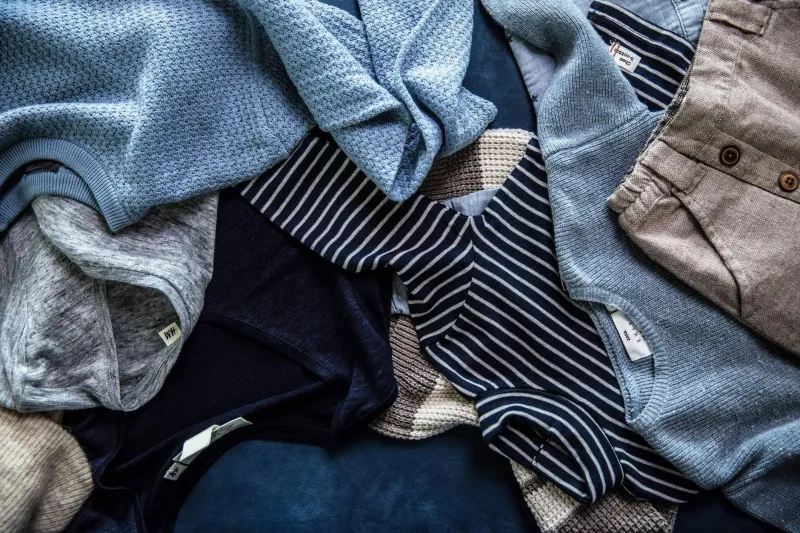
Start with one colour that both children will wear somewhere. Navy is the easy one for winter because it hides a multitude of nursery sins and works with almost every accent. Oat, forest green, rust, denim blue and soft grey are equally good, especially for families who prefer their children to look less like a school prospectus and more like they rolled out of a nice cottage kitchen.
The trick is to vary the amount and the placement. One child might wear a mustard jumper with navy trousers; the other wears navy leggings with a cream top and mustard socks. Same family palette, different plot. Nobody has to wear the same dungarees in the same size, and nobody has to be the one who always gets the plain version while their sibling gets the fun bit.
Use the 70/20/10 rule and save yourself an argument
A simple proportion keeps sibling outfits from tipping into costume. Aim for roughly 70 per cent anchor colour, 20 per cent neutral and 10 per cent accent. The older child might do anchor trousers, neutral top and accent bobble hat. The baby might do anchor cardigan, neutral babygrow and accent booties. The colours connect; the garments do not.
This is also useful when one child is going through a strong opinion phase. If your four-year-old insists on the red wellies, make red the accent for the day and build the baby's outfit around navy or oat. The red wellies become a shared family detail rather than a battle.
Nursery-run layering that survives real British weather
November in the UK asks a lot of childrenswear. It is cold enough for proper layers, mild enough for a nursery cloakroom to become a sauna by 10am, and wet enough that a pram walk can turn into a small aquatic event. The colour pact should work with that, not against it.
Start with a base vest, add a jersey top or long-sleeved bodysuit, then a jumper or cardigan, then an outer layer. Keep the anchor colour in the middle layer or the trousers so it still shows when coats come off. A navy jumper under a yellow raincoat still reads as navy; a navy coat over a mustard jumper does the same job in reverse.
Pram-friendly fabrics matter more than cute collars. Look for soft jersey, brushed-back cotton, corduroy, fleece-lined leggings and shower-resistant shells. Avoid anything too bulky under a harness, and check that the baby can still bend their knees in the pram suit. A coordinated outfit that makes the car seat or pram buckle a two-person job is not a win.
Fabrics that cope with playdough and the charity rail
For the anchor pieces, choose fabrics that wash well and keep their colour. Cotton jersey, sweatshirting, corduroy and thick cotton are reliable. A merino blend is lovely for older children who feel the cold, but check the wash label before you commit. Ripstop and shower-resistant shells are useful for the outer layer, especially if your nursery run involves a scooter, a puddle or both.
On the charity rail, check the stretch first. Give the waistband a gentle pull, look at the knees and cuffs, and read the wash label. Anything that has already gone bobbly under the arms will not survive a second childhood. Good finds are usually plain anchor basics: navy joggers, oat cardigans, denim pinafores, forest green jumpers. Leave the novelty prints for the accent layer, where a small amount goes a long way.
Supermarket and charity-rail maths
Anchor pieces are where budget shops earn their keep. Tu at Sainsbury's, George at Asda, F&F at Tesco and Nutmeg at Morrisons all do plain leggings, vests and jumpers that can take a beating. Buy the anchor basics new or second-hand in neutral colours, then spend your energy on one accent piece per child. That might be a mustard beanie, a red cardigan, a pair of forest green tights or a little corduroy pinafore in a shade that makes the whole outfit look considered.
The charity rail is brilliant for accent pieces because you can experiment for less. A bright red jumper for £3 is much easier to say yes to than a full-price version your child may refuse by Thursday. Wash it, check the seams, and let it earn its place in the colour pact.
Photo-ready without the portrait-studio stiffness
Family photos work best when the colours are doing the connecting and the clothes are not too fussy. Avoid large logos and matching slogans. Instead, repeat one colour across both children and vary the texture. A chunky knit on one and smooth jersey on the other looks richer than two identical sweatshirts.
Let each child choose one thing. The baby can choose between two hats; the older child can pick the accent colour for the day. That small bit of control makes the outfit feel like theirs, which is usually the difference between a child who poses and a child who lies down on the pavement in protest.
A sample week of two-child colour pacts
Monday nursery run: navy anchor for both, mustard accent on one, cream accent on the other. Tuesday pram walk: oat anchor, forest green accent in the hats and socks. Wednesday messy play: grey anchor, bright red accent on the older child's jumper and the baby's booties. Saturday family lunch: denim anchor, cream neutral, red or pink accent. Sunday slow day: soft grey anchor with one child in a pink cardigan and the other in a blue jumper, both wearing the same navy trousers.
The personality clause
A colour pact is not a contract. If one child refuses the anchor colour, move it to socks, a hair bobble or a coat. If the baby is going through a phase of only wearing the bunny cardigan, make the bunny cardigan the accent and build around it. The aim is a family look with two signatures, not two children dressed as a limited edition set.
By the door, do the final check. Can both children move, sit, nap and get into a pram or car seat? Will the outfit survive a wash and a biscuit? Would you smile at the photo in ten years? If yes, the pact has done its job. Same palette, different plot, and nobody has had to wear an identical jumper against their will.